The Power of the Check-In: Why Engagement is the Secret to a Reliable Dog
You know that feeling when you're out for a walk at Little Red River Park, the air is crisp, the sun is hitting the pines just right, and then... a squirrel darts across the path? Or maybe another dog appears on the horizon?
Suddenly, your 60-pound companion becomes a furry anchor, dragging you toward the distraction while your voice, pleading, then demanding, seems to disappear into the wind. It's frustrating, it’s exhausting, and let's be honest, it can be a little embarrassing when you’re just trying to enjoy a quiet afternoon in Prince Albert.
We’ve all been there. It feels like your dog has "selective hearing," and no amount of shouting their name seems to bridge the gap. But here’s the thing: the problem usually isn't that your dog is being "stubborn." Most often, it's a simple lack of engagement.
The secret to a dog that actually listens, even when the world is full of distractions, isn't a louder "Sit" or a sharper "Stay." It’s something much quieter, much more powerful, and completely voluntary. We call it the Check-In.
What Exactly is a "Check-In"?
In the world of professional dog training in Prince Albert, we talk a lot about "engagement." Think of engagement as the invisible tether between you and your dog. It’s the desire they have to keep an eye on you, to check your vibe, and to see what you’re up to next.
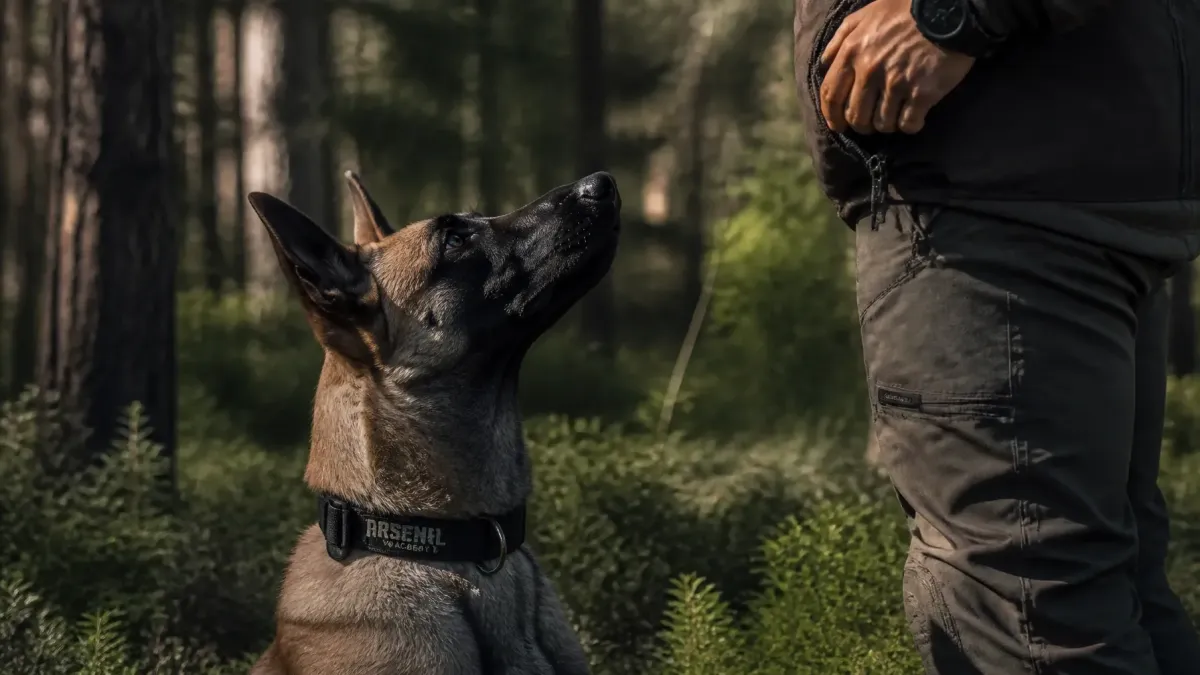
A check-in is the physical manifestation of that engagement. It’s that split second when your dog, without being asked, turns their head and looks at you.

It might be a quick glance over the shoulder during a walk on the Rotary Trail, or a long look into your eyes while you’re waiting for the light to change. It’s your dog saying, "Hey, I'm still with you. What’s the plan?"
When a dog checks in voluntarily, they are choosing you over the environment. And that choice is the foundation of everything we do here at Arsenal Canine Academy.
Why the Check-In is Your Secret Weapon
Why do we care so much about a simple glance? Because you can’t give a command to a dog that isn't paying attention.
If your dog is 100% focused on a gopher hole or another dog across the street, they literally cannot "hear" your recall command. Their brain is full. By teaching them to check in, you are creating "handler awareness." You're training them to keep one ear (and one eye) on you at all times.
Here’s why it’s a game-changer:
It reduces reactivity: If your dog is checking in with you, they aren't staring down (and loading up on) the dog they’re about to lung at. It’s the ultimate "reset" button.
It makes walks effortless: A dog that checks in is a dog that isn't pulling. They’re staying close because that’s where the "good stuff" happens.
It’s the backbone of a solid recall: You can't call a dog back if they don't even know you're there.
How to Build the Habit (Step-by-Step)
The beauty of engagement training is that you can start right now, in your own living room. You don't need fancy equipment, just some high-value treats and a bit of patience.
Phase 1: The "Nothing for Free" Game (Indoors)
Start in the quietest place possible. No TV, no kids running around, just you and your dog.
Be Boring: Stand still and say absolutely nothing. Don't call their name. Don't whistle. Just wait.
The Moment: Eventually, your dog will get bored and look at you as if to ask, "Why are we just standing here?"
The Reward: The second their eyes meet yours, mark it with a happy "Yes!" and give them a treat.
Repeat: Do this 5-10 times. You’re teaching them that looking at you is the most rewarding thing they can do.

Phase 2: Adding a Little "Spice" (The Backyard)
Once they’re staring at you in the kitchen, take it outside. The backyard has smells and birds, which makes it a "Level 2" distraction.
Follow the same steps. If they get distracted, don't nag them. Just wait. When they remember you exist and look back, jackpot! Give them three treats in a row. You want them to think, "Wow, checking in even when there are birds around pays out big time!"
Phase 3: The Real World (The "Prince Albert" Test)
Now, we take it to the streets. During your regular walk, keep a loose leash. Every single time your dog looks back at you: even if it’s just for half a second: mark it and reward it.
If you’re struggling with this stage, it might be that the environment is just too "loud" for your dog's current skill level. This is a common hurdle in puppy training in Prince Albert, where everything is new and exciting. If they won't look at you, move further away from the distraction until they can.
Obedience vs. Engagement: What’s the Difference?
This is a big one. Often, owners think that if a dog knows "Sit" and "Stay," they are well-trained. But there is a massive difference between obedience and engagement.
Obedience is your dog doing what you told them to do because they have to. It's transactional.
Engagement is your dog wanting to work with you. It’s a partnership.
Think of it like this: Obedience is a boss telling an employee to file a report. Engagement is two teammates playing a sport together. When you have engagement, the obedience becomes easy. If you're wondering which one your dog actually needs, you might want to check out our breakdown on Obedience vs. Behaviour Modification.

Common Pitfalls to Avoid
When you're working on this, it's easy to accidentally sabotage your progress. Here are a few things to keep in mind:
Don't over-use their name: If you say "Fido! Fido! Fido!" and they don't look, you're just teaching them to ignore their name. The check-in should be voluntary. Let them choose to look.
Don't be a "Muffin": If you're just a vending machine that drops treats, your dog might get bored. Use play! Use praise! Make yourself the most interesting thing in the world.
Watch the "Selective Hearing": If your dog listens at home but fails outside, they aren't being "bad": they're just overwhelmed. We dive deeper into this in our post about Selective Hearing in Prince Albert.
Building a Stronger Partnership
At Arsenal Canine Academy, we believe that training shouldn't feel like a chore for you or your dog. It should be about building a clear line of communication. When your dog starts checking in, the world gets a little smaller, and your bond gets a lot bigger.

Whether you have a new puppy or an older dog who has developed some "spicy" habits, engagement is the key that unlocks the rest of your training. It transforms a dog that you have to "manage" into a companion you can truly enjoy.
If you’re feeling stuck or your dog’s reactivity is making walks a nightmare, remember: you don’t have to do it alone. From our "Reconstructing Rover" programme to our specialized work with reactive dogs, we’re here to help you and your dog find that connection again.
Ready to see what your dog is truly capable of? Reach out to us and let’s get started on building a dog that wants to listen.
