Coffee Shop Ready: Training Your Dog for Stress-Free Outings in Prince Albert
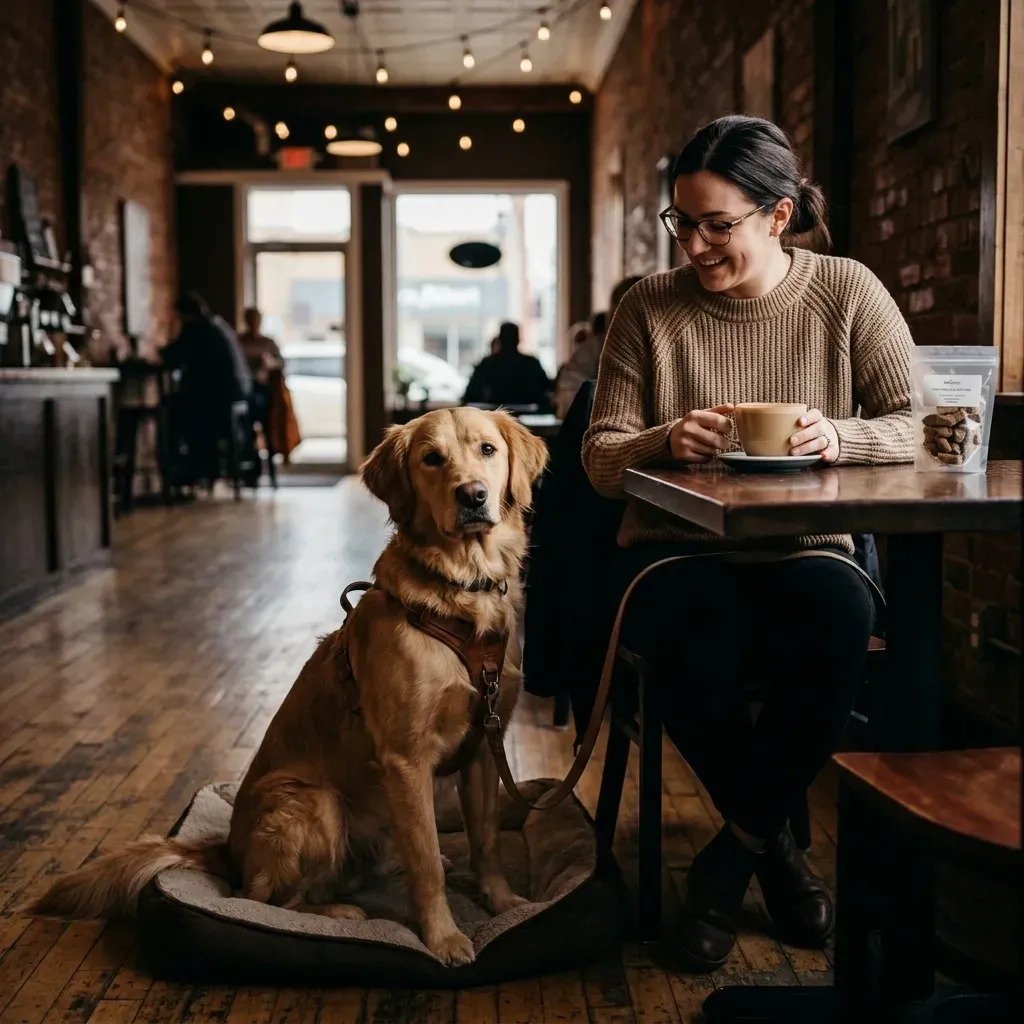
We’ve all been there. You’re walking down Central Avenue, the sun is finally out, and you see that perfect patio spot at a local coffee shop. You imagine yourself sitting there, sipping a latte, with your dog resting calmly at your feet while the world passes by. It’s the dream of the "portable dog": a companion who fits seamlessly into your lifestyle, whether you’re heading to the park or grabbing a quick brew.
But then, reality hits.
Your dog spots a squirrel across the street, or perhaps another dog three blocks away, and suddenly your arm is being yanked out of its socket. Instead of a relaxing coffee break, you’re performing a low-rent version of a tug-of-war match in front of a dozen strangers. By the time you get home, you’re frustrated, your dog is overstimulated, and that "stress-free outing" feels more like a marathon you didn't train for.
If your dog falls into the "normal but naughty" category: the kind of dog that is lovely at home but a bit of a disaster in public: you aren't alone. You don't need a dog with extreme aggression issues to benefit from professional help. Sometimes, you just need a dog that listens when there’s a distraction more interesting than a piece of kibble.
The Myth of the "Naturally Good" Public Dog
It’s easy to look at those perfectly behaved dogs sitting under cafe tables and think they were just born that way. While temperament plays a role, the truth is that "public manners" are a specific skill set. Most dogs aren't naturally equipped to handle the sensory overload of a busy Prince Albert neighbourhood without a bit of guidance.
When we talk about dog training in Prince Albert, we often focus on the extreme cases: the biters, the fighters, and the truly fearful. But there is a huge middle ground of dogs that simply lack the impulse control to navigate public spaces politely. These are the dogs that jump on strangers because they're too friendly, or the ones that bark at the sight of a bicycle because they've never been taught how to be neutral.
Training isn't just about fixing "bad" dogs; it’s about giving "good" dogs the tools they need to succeed in a human world.

Why Obedience Training is Your Passport to Freedom
Many owners hesitate to seek out obedience training in Prince Albert because they feel their dog’s issues aren't "bad enough" to warrant professional help. But think of training as a passport. The more reliable your dog’s obedience is, the more places they get to go.
When your dog understands how to walk on a loose leash and how to "settle" on command, your world opens up. You stop leaving them at home because it’s "too much work" to bring them along. You start including them in your weekend plans. This shift from "chore" to "companion" is exactly what we aim for at Arsenal Canine Academy.
A huge part of this foundation is built through our Reconstructing Rover program. While the name sounds intense, the principles are universal. We focus on structure, clarity, and building a relationship where the dog looks to you for direction rather than making their own (often chaotic) choices.
Mastering the Art of the "Settled" Dog
The biggest hurdle for most "naughty" dogs in a coffee shop setting isn't a lack of tricks: it’s a lack of a "stay" or "place" command. If your dog can sit for three seconds but then spends the next ten minutes pacing at the end of the leash, you won't be enjoying that latte.
The goal is to teach your dog that "nothing is happening right now." This is often the hardest lesson for a high-energy or easily distracted dog to learn. In our training sessions, we work on duration and neutrality. We want your dog to see a stranger walk by with a bag of muffins and think, “Cool, but my job is to keep lying here.”

The Struggle with Leash Training in Prince Albert
Let’s talk about the walks. Leash training in Prince Albert can be a challenge, especially with our changing seasons. Between icy sidewalks in the winter and the sudden influx of people and pets in the summer, your dog’s leash manners are constantly being tested.
A dog that pulls isn't just annoying; it’s a safety risk. It’s also a major barrier to those stress-free outings. If you’re constantly braced for a lunging moment, you aren't relaxed, and your dog picks up on that tension. We focus on teaching dogs to follow a loose leash, not because they’re being forced, but because they understand that staying near you is the most rewarding place to be.
If you've found yourself struggling with dog training in Prince Albert, it’s often because the "why" hasn't been communicated clearly to the dog. Once they understand the boundary, the pulling stops, and the walk becomes a shared experience rather than a contest of strength.
Incremental Progress: From the Backyard to the Bistro
You wouldn't expect a toddler to sit through a five-course meal without some practice, and we shouldn't expect it from our dogs either. The secret to a "portable" dog is incremental exposure.
The Quiet Zone: Start in your living room or backyard. If your dog can’t "down-stay" while you drink a coffee at home, they definitely won't do it at a cafe.
The Neighbourhood Walk: Focus on neutral behaviour. Praise your dog for ignoring the neighbour's barking dog or the kids playing hockey in the street.
The "Dry Run": Take your dog to a local park or a quiet area near a shop. Don't actually go in. Just sit on a bench for five minutes, reward the calm behaviour, and leave.
The Short Stay: Finally, hit the patio. Keep the first few visits short: ten minutes max. Leave while your dog is still being good so you end on a high note.

Dealing with Distractions (The Saskatchewan Way)
Living in Saskatchewan means our dogs have to be hardy, but they also have to be adaptable. Whether it's the sound of a heavy truck rattling down the road or a sudden gust of wind blowing a napkin across the patio, distractions are everywhere.
At Arsenal Canine Academy, we don't train in a vacuum. We know that real life happens. That’s why we emphasize training in environments that mimic the real world. If your dog only listens in a quiet training hall, that obedience won't help you when you’re trying to navigate a busy weekend market.

Moving Past the "Extreme" Label
It’s a common misconception that professional trainers are only for dogs with "problems." In reality, most of our clients are just like you: people who love their dogs and want a better, more harmonious life with them. You might be dealing with a dog that is ignoring you in public places, or perhaps you’re just tired of the jumping and the barking.
There is no shame in saying, "I want my dog to be better behaved so I can enjoy them more." In fact, it’s one of the best things you can do for your dog’s mental health. A dog that understands the rules is a dog that feels secure. When they know exactly what is expected of them in a public space, their anxiety levels drop, and their confidence grows.
Your Journey to a Stress-Free Companion
Imagine the next time you head out for a walk. Your dog is walking calmly by your side, the leash is slack, and you feel a sense of pride rather than a sense of dread. You stop for that coffee, your dog tucks themselves neatly under the table, and for the first time in a long time, you actually get to finish your drink while it’s still hot.
That version of your dog isn't a fantasy: it’s a result of consistent, clear communication and the right foundation. Whether you’re starting with a new puppy or trying to break through a training plateau with an older dog, the effort is always worth it.

If you’re ready to turn your "naughty" dog into a polite public companion, we’re here to help. From mastering basic leash manners to refining that "coffee shop settle," our team at Arsenal Canine Academy specializes in practical, real-world results.
Don't wait for a "bad" behaviour to become a crisis. Let’s start building that stress-free lifestyle today. You can learn more about us or reach out to start your journey. Your future, more portable dog will thank you: and you’ll finally get to enjoy that patio latte in peace.
