
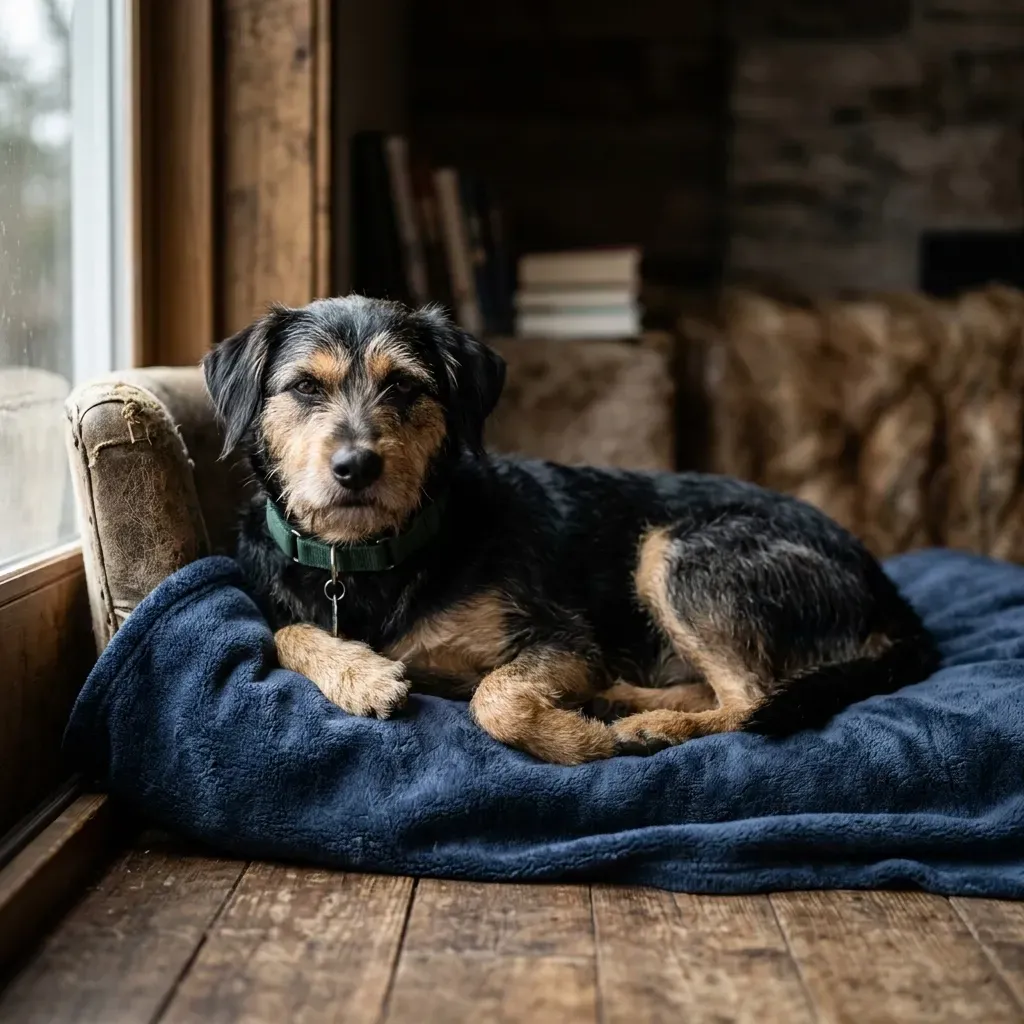
The Ultimate Guide to Decompressing Your New Rescue Dog
You finally did it. You walked into the shelter, saw those big soulful eyes, and decided that this was the one. You’ve got the new leash, the fancy bed, and a bag of premium kibble waiting at home. You’re ready for a lifetime of cuddles and weekend hikes. But when you get through the front door, things don’t exactly go like the movies.
Your new best friend might be pacing nervously, hiding under the dining room table, or, alternatively, acting like a caffeinated toddler on a sugar rush. It’s a lot. And while it’s tempting to feel a little discouraged, we want to tell you right now: it’s totally normal.
Bringing a rescue dog home is a massive life event, and not just for you. For your dog, it’s a complete sensory overhaul. At Arsenal Canine Academy, we see this all the time. The secret to a successful transition isn’t immediate "fun", it’s a process called decompression.
What is Decompression, Anyway?
Think of decompression as a "system reset." Most rescue dogs have been through a lot of transitions: shelters, transport vans, foster homes, and now your living room. Their cortisol levels (the stress hormone) are likely through the roof.
Decompression is the period where we allow those stress levels to drop so the dog’s true personality can actually emerge. If you jump straight into heavy training, dog parks, or inviting the whole neighbourhood over to meet the new pup, you’re essentially pouring water into a glass that’s already full. It’s going to overflow.
As a leading dog trainer in Prince Albert, we always remind owners that the first few weeks aren't about performance: they’re about peace.

The 3-3-3 Rule: Setting Your Expectations
If there’s one thing we wish every new dog owner knew, it’s the 3-3-3 rule. It’s a general guideline for the milestones of a rescue dog’s adjustment. While every dog is an individual, this roadmap helps keep your expectations realistic.
The First 3 Days
In the first 72 hours, your dog is likely feeling overwhelmed. They might not want to eat, they might have "accidents" in the house (even if they were told to be house-trained), and they might spend a lot of time sleeping or hiding. They are essentially in "survival mode." This is not the time to test their obedience training in Prince Albert. This is the time to let them realize they are safe.
The First 3 Weeks
By now, your dog is starting to settle into your routine. They realize that the food comes at the same time every day and that "outside" means potty time. This is often the "testing" phase. As they start to feel more comfortable, they might start pushing boundaries or showing behaviours you didn't see in the first three days: like barking at the window or jumping on guests.
The First 3 Months
Usually, around the 90-day mark, a dog truly feels "home." They’ve built a bond with you, they understand the house rules, and their true personality is fully on display. This is when the real work of building a long-term partnership begins.
Structure is the Greatest Form of Love
It sounds a bit backwards, doesn't it? We want to shower our new rescue with affection and treats to make up for their "tough past." But here’s the reality: to an anxious dog, total freedom is actually terrifying.
Imagine being dropped into a foreign country where you don’t speak the language and nobody gives you a map. That’s what your dog feels like. Structure is that map. By setting clear boundaries and a predictable routine from day one, you’re telling your dog exactly what is expected of them. This lowers their anxiety because they don’t have to guess how to behave.
One of the best ways to provide this structure is through a crate. A crate isn't a "jail": it’s a bedroom. It’s a safe space where they can retreat when the world gets too loud. If you're struggling with how to introduce this, check out our crate training tips for a calmer dog at home.
Distinguishing Fear from Aggression
One of the biggest concerns new owners have is when they see a growl or a lunging behaviour. Is my dog aggressive? Do I need a dog behaviourist in Prince Albert?
Oftentimes, what looks like aggression in those first few weeks is actually "reactivity" born out of fear. A dog that lunges at a passing cyclist or barks at a neighbour might just be saying, "I’m scared, stay away!"
At Arsenal Canine Academy, we specialize in reactive dog training in Prince Albert. We help owners identify these early signs of fear before they become deeply ingrained habits. The goal is to show your dog that you are the leader who handles the "scary stuff" so they don’t have to.
If you're noticing these behaviours, don't panic. It doesn't mean your dog is "broken." It just means they need a bit more guidance and a clear communication system.

Clear Communication: The Arsenal Methodology
Most people think dog training is about teaching a dog to "sit" or "stay." While those are great, at Arsenal Canine Academy, we believe training is about building a partnership.
An anxious or shut-down rescue dog doesn't need more commands; they need clear communication. They need to know what "Yes" means and what "No" means. When the communication is muddy, the dog gets frustrated. When the communication is clear, the dog gains confidence.
Our methodology focuses on training the human just as much as the dog. We want you to understand why your dog is doing what they’re doing. When you can read their body language, you can advocate for them. If your dog is feeling overwhelmed on a walk, you’ll know it’s time to head home rather than pushing them into a situation that leads to a meltdown.
How We Can Support Your Journey
We know that bringing home a rescue can feel like a rollercoaster. Sometimes you need a little extra help to get things on the right track. We offer two primary paths for new owners:
Reconstructing Rover
This program is designed for establishing that vital foundation of obedience. We work with you and your dog to build a language of engagement and respect. It’s perfect for the "3-week mark" when your dog’s personality is emerging and you want to ensure they develop good habits from the start.
Boarding Rover
For more intensive behavioural work: especially if you’re dealing with significant reactivity or a dog that is completely shut down: our Board and Train program can be a game-changer. Your dog stays with us in a structured environment where we handle the heavy lifting of the initial decompression and training. Then, we spend time teaching you how to maintain that success at home. You can learn more about how to prepare your dog for a successful boarding and training experience on our blog.

The Road Ahead
Giving a rescue dog a second chance is one of the most rewarding things you can do. But remember: you are building a relationship that will hopefully last a decade or more. You don’t have to accomplish everything in the first weekend.
Focus on the small wins. The first time they sigh and relax in their crate. The first time they look to you for guidance when a doorbell rings. Those tiny moments are the building blocks of a great life together.
If you’re feeling stuck or just want to make sure you’re starting off on the right foot with dog training in Prince Albert, we’re here to help. You don’t have to figure it all out by yourself.
Ready to start building a better partnership with your new companion? Contact us today to discuss which of our programs is the best fit for your rescue dog's needs. Let's turn that "survival mode" into a thrive mode.
