7 Communication Mistakes You’re Making With Your Dog
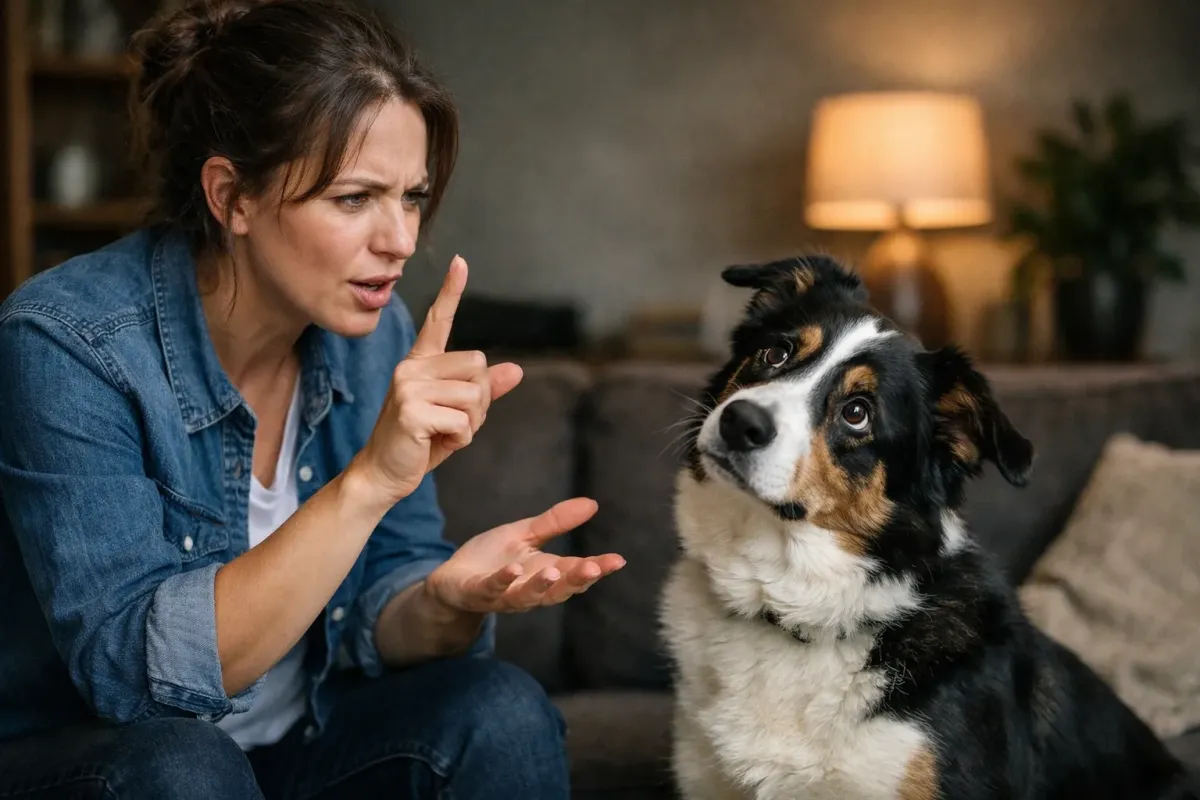
Have you ever found yourself standing in the middle of your living room, repeating the word "sit" for the tenth time while your dog stares at you with a blank expression, or worse, decides that now is the perfect time to zoom around the coffee table? It’s a scene most of us have lived through. It’s frustrating, a little bit exhausting, and can make you feel like you’re speaking two completely different languages.
The truth is, you are speaking different languages.
We communicate primarily through words and complex sentences. Dogs, on the other hand, are masters of body language, energy, and environmental cues. When these two worlds collide without a clear bridge, we end up with "misunderstandings" that we often label as stubbornness or bad behaviour.
At Arsenal Canine Academy, we believe that most behavioural issues aren't about "bad dogs", they're about a breakdown in communication. By identifying the common mistakes we make as handlers, we can start building a partnership based on trust rather than confusion. Here are seven of the most common communication mistakes and how you can fix them to help your dog succeed.
1. Forcing Physical Affection (The "Hugging" Trap)
It’s the most natural thing in the world for a human to wrap their arms around something they love. For us, a hug is a symbol of safety, comfort, and deep affection. But in the canine world, wrapping your arms around another's neck is often seen as a display of social pressure or even a threat.
While some dogs grow to tolerate or even enjoy hugs from their specific humans, many find it incredibly stressful. They feel trapped and unable to escape a situation they don't fully understand. If you notice your dog yawning, licking their lips, or turning their head away while you’re snuggling them, they aren't being "cute", they’re politely asking for space.
The goal isn't to stop showing affection; it's to show it in a way your dog actually appreciates. Focus on chest scratches or side-strokes rather than leaning over them. By respecting their physical boundaries, you're actually building a much deeper level of trust.

2. Using "Verbal Clutter"
We love to talk to our dogs. We tell them about our day, we explain why they can’t have a second dinner, and we give commands that sound more like a polite request at a dinner party. "Buddy, honey, could you please sit down so I can put your leash on?"
To your dog, that sentence is just a long string of "blah blah blah." By the time you get to the word "sit," they’ve likely tuned you out or become distracted by your hand movements. Dogs excel at responding to short, punchy cues. When we use too many words, we’re essentially burying the signal in a mountain of noise.
The fix is simple: keep it clean. Use one word for one action. If you’re working on dog obedience training in Saskatchewan, you’ll find that a single "Sit" followed by a clear reward is infinitely more effective than a paragraph of explanation.
3. Misinterpreting the "Guilty" Look
We’ve all seen it. You come home to a shredded throw pillow, and your dog is hunkered down, tail between their legs, looking up at you with those "I’m sorry" eyes. We immediately think, He knows what he did.
Here’s the hard truth: he doesn't.
Research into canine behaviour shows that the "guilty look" is actually a display of appeasement. Your dog isn't feeling moral regret for the pillow; they are reacting to your body language and tone. They see that you are unhappy or angry, and they are using submissive signals to try and de-escalate your "attack."
If you punish a dog minutes, or hours, after the event, they won't connect the punishment to the act of chewing. They’ll just connect your arrival home with fear and unpredictability. If you’re struggling with these kinds of household destructions, it might be time to look into correct dog behaviours for a happier home to address the root cause, like boredom or anxiety.
4. Falling for the "Alpha" Myth
For decades, popular media told us we needed to be the "Alpha" or the "Pack Leader" through physical dominance. We were told to alpha-roll our dogs or eat before them to show them who’s boss.
However, modern science has largely debunked this. Dogs know we aren't dogs. Trying to "dominate" them often just leads to a dog that is suppressed, fearful, or reactive because they don't feel safe with their handler.
True leadership isn't about being the loudest or the strongest; it’s about being the most consistent and reliable. Think of yourself as a mentor or a partner. When you provide clear boundaries and a predictable environment, your dog doesn't feel the need to "take over." They can relax because they know you have everything under control.

5. Inconsistency With the Rules
Inconsistency is the fastest way to stress out a dog. Let's say that on Monday, when you’re wearing your old gym clothes, you let your dog jump up to say hello. But on Tuesday, when you’re wearing your work suit, you yell at them for doing the exact same thing.
From the dog's perspective, the rules of the world have just changed for no reason. This creates "conflict," which leads to anxiety. If a behaviour is allowed sometimes, your dog will try it all the time to see if this is one of those "lucky" moments.
To build a confident dog, everyone in the household needs to be on the same page. If the dog isn't allowed on the couch, they shouldn't be allowed on the couch: even on rainy Sunday afternoons. Clarity creates comfort. If you find your progress has stalled because of these mixed signals, check out our guide on how to break through dog training plateaus.
6. Ignoring Subtle Anxiety Signals
Most owners recognize a growl or a bark as a sign of trouble, but dogs usually give dozens of "micro-signals" before they ever reach that point.
When a dog is feeling overwhelmed, they might:
Yawn (when they aren't tired).
Lick their lips (when there’s no food around).
Show the "whale eye" (the whites of their eyes).
Suddenly sniff the ground to avoid eye contact.
When we ignore these signals and push the dog to "just be social" or "deal with it," we are teaching them that their communication doesn't matter. This can lead to a dog that eventually "explodes" because their polite whispers were ignored. Learning to read these signs is crucial, especially if you’re considering high-intensity activities like building success in K9 detection training, where the dog’s focus and emotional state are everything.
7. Being a "Negative-Only" Communicator
Imagine a boss who only ever spoke to you when you made a mistake. They never said "good job," never gave a bonus, and only appeared when they wanted to scold you. You’d probably hate going to work, and you’d likely start avoiding that boss as much as possible.
Many owners fall into this trap. They ignore the dog when they’re laying quietly on their mat (because they're being "good"), and only offer attention when the dog is barking or chewing a shoe. This inadvertently teaches the dog that the only way to get a "reaction" from their human is to misbehave.
Communication should be a two-way street that celebrates the wins. Catch your dog being good. If they choose to lie down while you eat dinner, drop a treat. If they look at you instead of barking at the mailman, tell them they’re a genius. Positive reinforcement builds a dog that wants to listen because they’re invested in the partnership.

Moving Forward Together
Correcting these mistakes isn't about being perfect; it's about being aware. We all slip up. We all get tired and let the dog on the bed when we shouldn't, or we get frustrated and vent our day at them in a long monologue. The key is to keep returning to the fundamentals: clarity, consistency, and empathy.
When you stop trying to "command" your dog and start trying to "communicate" with them, everything changes. The relationship shifts from one of conflict to one of cooperation. You’ll find that your dog isn't "stubborn": they were just waiting for a version of the instructions they could actually understand.
If you’re feeling overwhelmed or like you’ve hit a wall in your communication, don't hesitate to reach out. Sometimes having a professional eye can help pinpoint exactly where the "translation" is falling through the cracks. You might realize it’s time to when to seek a dog behaviour expert to help get you both back on track.
At Arsenal Canine Academy, we’re here to help you and your dog find your rhythm. Whether you're working on basic manners or looking for advanced dog training in Prince Albert for restless dogs, the goal is always the same: a happy dog and a confident handler.
Ready to start the conversation? Contact us today and let’s build that partnership together.
